
Carnivorous & Exotic Plant Symposium & Expo
Kernersville, North Carolina – May 16–17, 2026
The Paul J. Ciener Botanical Garden (PJCBG), located in Kernersville, North Carolina, is thrilled to host the Carnivorous & Exotic Plant Symposium & Expo in partnership with the International Carnivorous Plant Society (ICPS). Funding and support for this exciting new event are being generously provided by the Guilford County Horticultural Society and the Paul J. Ciener Botanical Garden Foundation.
This two-day symposium and expo will be held May 16–17, 2026, with activities centered at the Kernersville Community Recreation & Event Center. Opened in January 2025, this $18.3 million facility offers spacious presentation halls and a vibrant expo floor—an ideal setting for two full days of learning, networking, and celebrating plants with fellow enthusiasts.
In addition to the main event, the Paul J. Ciener Botanical Garden will host off-site Master Gardener tours and special exhibits, extending the symposium’s educational and cultural reach across Kernersville.

Kernersville Community Recreation & Event Center

Ciener Botanical Garden
Tue, 01/13/2026 - 19:02
March 2026 CPN
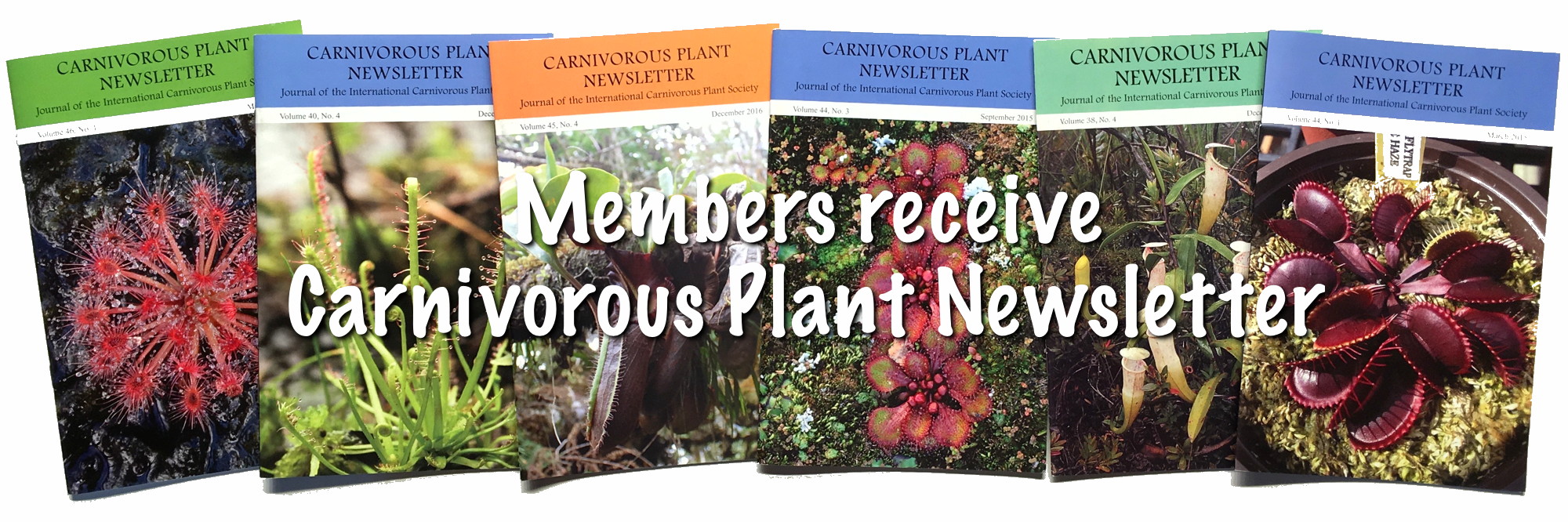
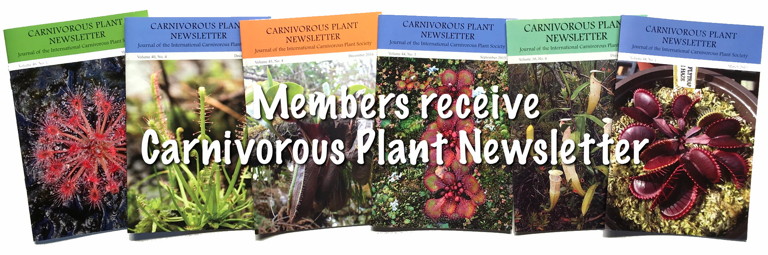
The Carnivorous Plant Newsletter (CPN) is the official publication of the International Carnivorous Plant Society. CPN is published in March, June, September, and December.
Features of CPN include horticultural articles, research papers, field trip reports, conservation news, book and literature reviews, communications from members, cultivar and species descriptions, and meeting announcements.
Contents of Volume 55 Number 1, March 2026
- 6th Annual World Carnivorous Plant Day May 6, 2026 — Kenny Coogan
- Carnivorous & Exotic Plant Symposium & Expo Kernersville, North Carolina—May 16–17, 2026 Update — Ernie Pages
- Restoring North Alabama’s Sarracenia oreophila bogs 2025 — Augustus Kirby
- Fundraising for the preservation of endangered Sarracenia — Katy Maxwell
- Uptake of lead by Nepenthes via their pitchers — Elizabeth M. Cusick and Francis Q. Brearley
- UV-induced fluorescence in the flowers of certain pygmy and tuberous Drosera and in the traps of Drosera barrettiorum — Andreas Fleischmann
- New cultivars — Aitor Tomás Reig and Alain Souralaysakd-Kim and Alexander Fisch and Théo Suwara and Zhikai Ma·Lishui
- Carnivorous plant with a carnivorous insect eating a carnivorous vertebrate — Mike Wang
View the Contents of All CPN Issues

Sat, 01/03/2026 - 09:33
Virtual Events on Zoom
The ICPS is offering Virtual Events on Zoom.

Are Carnivorous Plants Heterotrophic?
Feb 17, 2026 06:00 PM Eastern Time (US and Canada)
Register in advance for this meeting.
After registering, you will receive a confirmation email containing information about joining the meeting.
Carnivorous plants are heterotrophic, that is, having the ability to obtain carbon from sources other than photosynthetic processes, had been long debatable. We show that two lineages of sticky leaved carnivorous plants can assimilate organic carbon, systemically, from insect prey. We find that these lineages are heterotrophic and obtain a significant amount of carbon from prey, but it is generally half that of nitrogen.
Bio: Currently an Assistant Professor in Lakehead University, Ontario, Canada, working on nutrient transfer in carnivorous plants. Ph.D in Botany from University of British Columbia. Postdoc in University of Toronto and Penn State University. This presentation is based on my work as Postdoc in Penn State University, which was published in New Phytologist last year. Potential graduate students (Master/Ph.D) are welcome to apply and work with me on carnivorous plants.
Non-members of the ICPS are welcome.
The Virtual Events are hosted by ICPS Education Director, Kenny Coogan.
Our webinars will be recorded. They will be posted on the ICPS's social media (FB + YouTube) accounts about a week after the events.
Thu, 01/01/2026 - 18:46
December 2025 CPN
The Carnivorous Plant Newsletter (CPN) is the official publication of the International Carnivorous Plant Society. CPN is published in March, June, September, and December.
Features of CPN include horticultural articles, research papers, field trip reports, conservation news, book and literature reviews, communications from members, cultivar and species descriptions, and meeting announcements.
Contents of Volume 54 Number 4, December 2025
- A preview of the ICPS Conference 2026 — Felix Bokhorst
- Carnivorous & Exotic Plant Symposium & Expo Kernersville, North Carolina – May 16–17, 2026 — Ernie Pages
- Observations of subterranean pitchers in cultivated Nepenthes rhombicaulis — Michal R. Golos and Paul Leach
- Adaptive strategies of Nepenthes: A review — B. Wyatt Block
- New cultivars — Marcel van den Broek and Chris Rawlings and Yuri Sarzi and Rob Emberson and Flavio Boschi and Danilo Cazzaniga and Valerio Guidolin and Julian Müller and José Antonio Negrete Moreno and Alexander Fisch
- Cultivar names registered in 2024 — Jan Schlauer
View the Contents of All CPN Issues

Mon, 12/01/2025 - 16:55
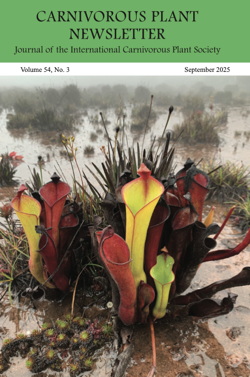
September 2025 CPN
The Carnivorous Plant Newsletter (CPN) is the official publication of the International Carnivorous Plant Society. CPN is published in March, June, September, and December.
Features of CPN include horticultural articles, research papers, field trip reports, conservation news, book and literature reviews, communications from members, cultivar and species descriptions, and meeting announcements.
Contents of Volume 54 Number 3, September 2025
- Erratum — Bob Ziemer
- ICPS Conference 2026: no plant is an island — Felix Bokhorst
- World Carnivorous Plant Day photo contest 2025 — Kenny Coogan
- New cultivars — Adrian Fawcett and Peter Hu and Yan-Min Ma and Maciej Stelmach
- Discovering the Lost World — François Sockhom Mey
View the Contents of All CPN Issues
Wed, 10/01/2025 - 18:24
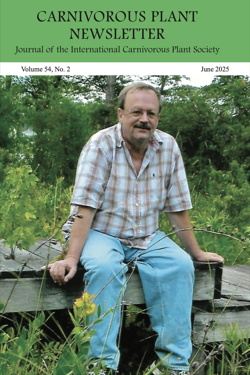
June 2025 CPN
The Carnivorous Plant Newsletter (CPN) is the official publication of the International Carnivorous Plant Society. CPN is published in March, June, September, and December.
Features of CPN include horticultural articles, research papers, field trip reports, conservation news, book and literature reviews, communications from members, cultivar and species descriptions, and meeting announcements.
Contents of Volume 54 Number 2, June 2025
- Carnivores in the Classroom grants 2025 — Kenny Coogan
- Peter D'Amato — Damon Collingsworth
- Volcanic sundews: an ecologically unique population of round-leaved sundews (Drosera rotundifolia) growing on an active volcano in Hokkaido, Japan — Ken Kwak
- Expanding North Alabama's bogs 2024 — Patrick Thompson
- Possible Pinguicula laueana hybrid — Arthur Yin
- Pinguicula medusina as a host plant — Arthur Yin
- Carnivores in the Classroom grants — 2024 teacher reports — Kenny Coogan
- New cultivars — Pietro Falchi and Damon Collingsworth and Mustafid Rasyiid and Yonatan Kurniawan Kris Ananto and Ahmad Ariyan
View the Contents of All CPN Issues
Mon, 05/05/2025 - 16:36