|
For the first 25 years of its existence, the ICPS was almost exclusively
devoted to horticulture. It helped the sparsely strewn network of
carnivorous plant growers communicate. Conservation was considered
a laudable concept, but was not one in which the ICPS actively participated.
Within the last five years, however, much has changed.
The internet (and especially the carnivorous plant listserve developed
by ICPS board members, and the ICPS Web Ring) now supplies channels
of communication that the ICPS could once provide only through its
journal. Meanwhile the threats stressing populations of carnivorous
plants have reached critical levels...
- In the USA, approximately 95% of the carnivorous plant wetland
habitat has been irreversibly developed by humans.
- In Europe, vast moors and wetlands once filled with carnivorous
sundews and waterwheel plants have been drained or degraded by
agricultural run-off.
- In southeast Asia, slash and burn agriculture is destroying
remnant pitcher plant habitat.
- In western Australia, human development is eradicating delicate
pygmy and tuberous sundews.
The majority of carnivorous plant habitat is just a memory. All we
have left are the crumbs.
The ICPS membership can no longer afford to ignore these threats
to carnivorous plants, so the ICPS has become actively engaged in
conservation. A number of our projects and activities are listed
in the projects area. Look, read, and help us in our work.

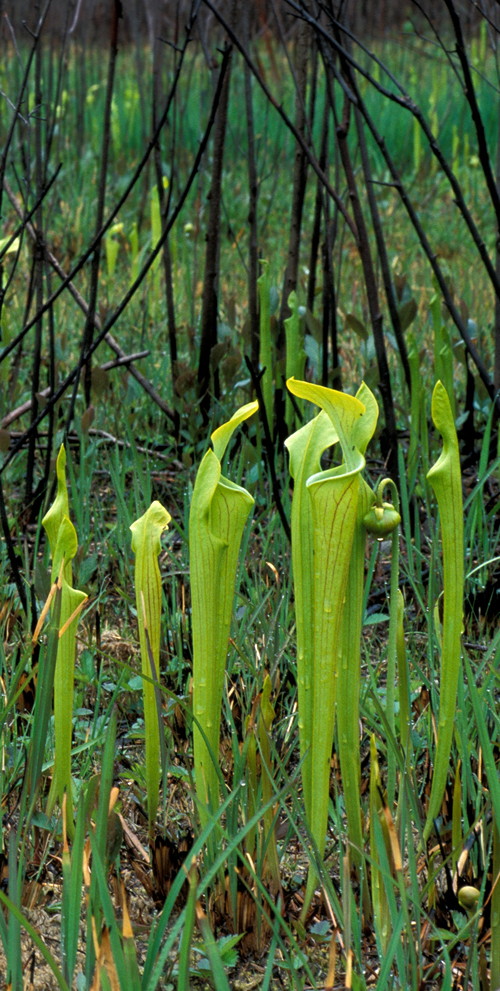
Death of yet another Sarracenia bog
|